Showing posts with label music. Show all posts

Thursday, May 29, 2014

JavaScript's Final Frontier - MIDI

JavaScript has had an amazing last few years. Node.JS has taken server-side development by storm. First person shooter games are being built using HTML and JavaScript in the browser. Natural language processing and machine learning are being implemented in minimalist JavaScript libraries. It would seem like there's no area in which JavaScript isn't set blow away preconceptions about what it can't do and become a major player.

There is, however, one area in which JavaScript - or more accurately the web stack and the engines that implement it - has only made a few tentative forays.  For me this represents a final frontier; the one area where JavaScript has yet to show that it can compete with native applications. That frontier is MIDI.

I know what you're probably thinking. Cheesy video game soundtracks on your SoundBlaster sound card. Web pages with blink tags and bad music tracks on autoplay. They represent one use case where MIDI was applied outside of its original intent. MIDI was made for connecting electronic musical instruments, and it is still very much alive and well. From lighting control systems to professional recording studios to GarageBand, MIDI is a key component of arts performance and production. MIDI connects sequencers, hardware, software synthesizers and drum machines to create the music many people listen to everyday. The specification, though aging, shows no signs of going away anytime soon. It's simple and effective and well crafted.

It had to be. Of all applications, music could be the most demanding. That's because in most applications, even realtime ones, the exact timing of event processing is flexible within certain limits. Interactive web applications can tolerate latency on their network connections. 3D video games can scale down their frames per second and still provide a decent user experience. At 30 frames per second, the illusion of continuous motion is approximated. The human ear, on the other hand, is capable of detecting delays as small as 6 milliseconds. For a musican, latency of 20ms between striking a key and hearing a sound, would be a show-stopper. Accurate timing is essential for music performance and production.

There's been a lot of interest and some amazing demos of Web Audio API functionality.  The Web MIDI API, on the other hand, hasn't gotten much support.  Support for Web MIDI has landed in Chrome Canary, but that's it for now.  A few people have begun to look at the possibility of adding support for it in Firefox.  Until the Web MIDI API is widely supported, interested people will have to make due with the JazzSoft midi plugin and Chris Wilson's Web MIDI API shim.

I remain hopeful that support for this API will grow, because it will open up doors for some truly great new creative and artistic initiatives.

Thursday, June 20, 2013

BBPlayer - A Simple HTML5 Audio Player

BBPlayer is a minimalist HTML5 audio player for playlists that I made for a project recently. If you're looking for the best HTML5 audio player there are now many available; BBplayer provides a simple alternative with a clean and simple design that can be easily styled using CSS.


BBPlayer uses the HTML5 audio element and allows you to add multiple audio source tracks to easily create a playlist.

Visit the bbplayer demo page or get the code from github.

Wednesday, August 22, 2012

Top Music Picks of 2011

When I started thinking about my top music picks for 2011, I had a hard time thinking of any one album that had really took the prize.  Instead an odd collection of material surfaced: a couple of web videos of studio footage, online music clips from a film composer, a few of one-off tracks, plus a couple of albums that had been on the shelf long enough to qualify as "rediscoveries".  It turns out there were also a bunch of new additions that got a lot of airplay last year. I've singled out a few of the favorites here and listed the rest in point form, and at the end included links to some of those music and video clips. Check them out!

Maria Joao and Mario Laghina - Cor (rediscovery)
This particular album has long been near the very top of my list of all time favorites, but it sat on the shelf long enough that when I took it out for a spin, it was a very nice rediscovery. It holds such a high position on my list of favorites that it definitely deserves a mention.  Maria Joao is a very gifted and unusual vocalist from Portugal. She's able to do amazing things with her voice, and isn't afraid to experiment. Her long-time collaborator Mario Laginha's performance on the piano is technically dazzling, and Trilok Gurtu amazing percussion work rounds out the album to create something that is really hard to classify, a mix of avant-garde, world music and European jazz . For a while, I had the opening track set to play as my morning wake-up alarm. The hushed sounds of an early-morning city scape and the soft, slumbering opening chords accompany an almost hymn-like vocal melody that slowly rises, flitters and then soars like a bird into a new day. This is an album that not everyone can appreciate, but those who do are likely to cherish it.

Daniel Goyone  - l'heurs bleu (rediscovery)
The French jazz composer and pianist Daniel Goyone may not be well known in North America, but those whose musical tastes extend to European jazz have probably heard of him. Like other European artists, Daniel Goyone has taken the Great American Art Form and combined it with local influences to create something unique and highly sophisticated. His evocative compositions meander between plaintive and sanguine, floating somewhere between major and minor, never seeming to settle. The unique combination of instruments, including bandeon, violin, marimba, oboe, and the aforementioned Trilok Gurtu on percussion, create something that's again hard to classify but sits somewhere between jazz, chamber music and traditional French folk music.  There are a few albums by Daniel Goyone that I've tried to get hold of; unfortunately they are very hard to find.

Brian Browne Trio - The Erindale Sessions

My biggest musical influence is undoubtedly the great Canadian jazz pianist Brian Browne. I first saw Brian playing at the Ottawa International Jazz Festival in 1999, and later was fortunate enough to study piano with him.  A couple of years ago, Brian told me of an old acquaintance who had discovered a collection of master tapes from a series of concerts that the Brian Browne Trio gave at the Erindale Secondary School library.  A teacher there by the name of Marvin Munshaw, who happened to be a huge jazz fan, brought the trio to the school and recorded them on a reel-to-reel deck. After some extensive remastering, the result is "The Erindale Sessions", featuring the original Brian Browne Trio as they sounded in the late 70's.

I mentioned this album last year before it was commercially available. It now is available, on iTunes and also direct from brianbrowne.com by mail order.  My favorite tracks are probably "Blues for the UFOs", "Stompin' at the Savoy", and "St. Thomas", but the whole album is a treasure.

Yellowjackets - Timeline

The Yellowjackets are my favorite band of all time. For many Yellowjackets fans, the return of William Kennedy must have seemed too good to be true.  Although Peter Erskine and Markus Baylor both did some fantastic drum work over the years since he left the band, William Kennedy's unique, polyrythmic style was a big part of the sound that people came to identify with the 'Jackets.  And he doesn't disappoint on this album, which marks the band's 30th anniversary.

The opening track "Why Is It" features all the rythmic and melodic intensity you'd expect from the Yellowjackets, but the overall tone of the album more reflective, characterized by several richly crafted ballads, especially the title track "Timeline", the lush ballad "A Single Step", and the lyrical closing song "I Do".  Beautiful work from an exceptional band, who after 30 years is still producing some of the finest electro-acoustic jazz ever.

Peter Martin - Set of Five

The piano music of Peter Martin was an exciting Youtube discovery, with his great 3-minute jazz piano clips.  His short-play album "Set of Five" features five solo piano pieces that are all excellent, range from hard-bop to ballads, and wrap up with an amazing jazz cover of Coldplay's Viva la Vida.

Peter Martin's playing is technically brilliant, easy to listen to, and steeped in the best jazz piano traditions with a flair for originality and innovative arrangements. Definitely recommended.  The album is available for download on iTunes. Check out Peter Martin's web site http://petermartinmusic.com for more on this talented pianist.

Bernie Senensky - Rhapsody
Bernie Senensky is another great Canadian jazz pianist. He has recorded quite a few albums, but it wasn't until my musical mentor Brian Browne played a few tracks from this CD for me that I got switched on to his music.  The interpretations of standards on this album are creative and technically impressive. Top notch jazz piano trio music.

Other albums that were favorites of 2011 include the following, all of which are highly recommended!
  • Bob Van Asperen, Orchestra of the Age of Enlightenment - Handel's Organ Concerto's Opus 4
  • Brad Mehldau - Highway Rider
  • Charlie Haden & Hank Jones - Steal Away
  • Lyle Mays - Solo Improvisations for Expanded Piano
  • Bruce Cockburn - Life Short Call Now
  • Keith Jarrett & Charlie Haden - Jasmine
  • Pat Metheny - Secret Story
  • Empire of the Sun - Walking On a Dream (Special Edition)
  • Bill Evans - The Paris Concert
And to finish off, here are links to those video and audio clips I mentioned: David Norland, who composed the instrumental soundtrack for "Anvil: The Story of Anvil", and the legendary Lyle Mays performing on MIDI-fied piano and Spectrasonics software synthesizers with Alex Acuna on drums.

David Norland - Instrumentals from the Soundtrack to "Anvil: The Story of Anvil"
It seems a little strange that a film about a heavy metal band from Toronto could feature such nice background music. Somehow it worked, and contrasted beautifully with the over-the-top metal tunes Anvil is known for. The movie is actually a hilarious and moving documentary about a band that never quite made it to the big time, but refused to give up. David Norland's scoring for the film lent it a very human touch. Especially the tune "Shibuya", which you can hear in the Audio section, which is played in the film's closing scene, really captured the feeling of the story.

Check out the audio clips here:
http://www.davidnorland.com/

Lyle Mays demos Spectrasonics Trillian with Alex Acuna 

Lyle Mays album "Solo Improvisations for Extended Piano" was mentioned above. It's excellent, but here you can actually watch him performing live on a MIDIfied grand piano and synth, together with Alex Acuna, in HD video and high-quality audio.

http://vimeo.com/11854911
http://vimeo.com/11852047

Saturday, June 11, 2011

Smile

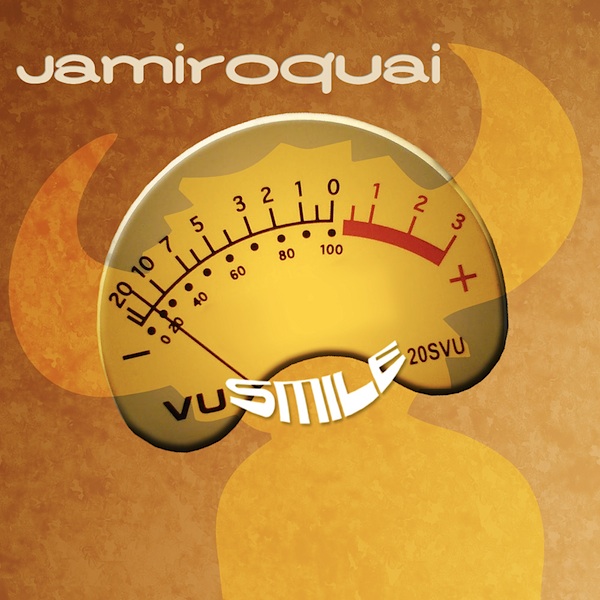
Reading articles on multi-core scaling while listening to a new track from Jamiroquai - "Smile" - available as a download from http://soundcloud.com/jamiroquai1/jamiroquai-smile. It's pretty good - even if you're not into software design for multi-core, multi-cpu computer architectures. :-)

Saturday, April 23, 2011

Map Reduce in JS

Joel Spolsky's piece "Can Your Programming Language Do This?" was an enjoyable read for three reasons: 1) he provides some clear, simple examples of map/reduce and anonymous functions, 2) he shows how these are natively supported in JavaScript (actually there is even more and better support for Map/Reduce in JavaScript than he describes) and 3) he hints (link to related article) at why Java is a mediocre language that produces mediocre software. Originally posted in 2006 it generated a big buzz on HN this morning and is more timely now than ever, considering the groundswell of support and innovation around JavaScript in the upcoming generation of web-scale programmers.

Those who follow the bleeding edge of software development today know that in the last two years there has been a Cambrian explosion of innovation and creativity related to JavaScript as a serious, server-side programming language.  It may not be a stretch to say that a majority of the software people interact with today is powered by JavaScript, considering the ubiquity of web-based applications. With the increasing prevalence of JSON as a data interchange format, the advent of high-performance server-side JavaScript engines, and non-relational data-stores that speak JSON natively, there is now, for the first time, a homogeneous software ecosystem that spans the N-tier distributed architecture. It seems this post from 2006 was prescient in it's discussion of the language's capabilities and potential.

A good post that hits three of my favorite birds with one stone, and an excellent cup of Francesco's dark roast on a rainy Saturday morning while listening to the Isbells.

Friday, April 22, 2011

Virtual Chior 2.0 "Sleep"

The previously mentioned production of Eric Whitacre's Virtual Chior 2.0 performance of "Sleep", previewed recently at TED, has been posted on Youtube. A brilliant collaboration of more than 2000 singers from around the world participating in a virtual choir.

Tuesday, April 5, 2011

2000 Voices

One of my top 10 albums of 2010 was Eric Whitacre's Cloudburst.  TED has just released a talk by Eric Whitacre featuring the amazing 2000-voice virtual choir singing two of the songs featured on the album.  It's definitely worth checking out.

Incidentally, I was at a meeting of high-tech entrepreneurs this evening, and in a very interesting conversation with a high-tech company founder who shares a background in classical music, was told that musical training, and piano in particular, often results in highly analytical thinking.  As an engineer with a background in music, I've always felt a strong connection between musical composition and technical design, but have never been able to say exactly what it is. This video really seems to find itself right at home in the intersection of artistic creativity and technical innovation.

Thursday, March 10, 2011

Omar

Prayer for Omar by darrenderidder

Here's a short composition I wrote using Omnisphere, a virtual synthesizer. It's basically a meditation on making a choice between two different mindsets: forgiveness, reconciliation, and respect for human dignity... versus fear, bitterness, vindictiveness and disregard for human rights. The song is meant to be a musical expression of the first mindset.  

Monday, November 29, 2010

Top 10 Music Picks of 2010

It's a bit early to post my top music picks of 2010 , but I've been adding to the list throughout this past year, and it's already grown to ten albums.  Compared to the last two years' Top 5 lists, that's a lot, so I'm going to post it now.

No surprise that the jazz pianists are well represented here.  Recently I got interested in the Hammond B3, which also shows up.  Several of the selections lean towards rich harmonic, evocative soundscapes.  Harmonic complexity is one way that musical ingenuity expresses itself, not always in fast bebop lines or modern polyrhythms.  This is some of the most beautiful music I have ever heard.

I should mention that a limited private edition CD by my musical mentor, the great Canadian jazz pianist Brian Browne, called the Erindale Sessions, is perhaps the album I treasure most from 2010. Although I don't believe this album is available for sale at this time, many of Brian's other albums are.

So here, without further ado, is my Top 10 list of albums for 2010.

Bill Evans - Consecration
The Consecration albums were recorded shortly before Bill Evans' death in 1980. He was ravaged by addiction and in failing health.  Joe LaBarbera said he could barely make it to the piano, but when he did, this incredible powerful energy just erupted out of him.  It's like he sensed that he was at the end, and he had to get it all out, to put down everything he had on that last recording. Bill Evans played like never before on these recordings.  They are very special.

Billy Childs - Lyric
Winning a Guggenheim Fellowship in music composition in 2009 is a testament to the talent and creativity of Billy Childs.  A mostly self-taught pianist and composer, Childs is one of those rare, gifted artists who seems destined to shape the future of jazz.  Blending classical, rock and jazz influences, this recording features a unique ensemble of instruments for which Childs scored compositions in a style he refers to as "orchestral jazz".  Its a brilliant recording.

Chick Corea - Solo Piano: Standards
One of the most versatile jazz pianists on the scene, Chick has recently been touring with Return to Forever, the jazz-rock group he rose to fame with in the 70's.  Chick really is one of the greatest.  His work with Return to Forever and the Electric Band often come to mind, but it's his reinterpretations of jazz standards on solo piano that I really enjoy.

Friday, November 12, 2010

The Gig

I'm lucky enough to be in a band of local musicians who get called together a couple of times a year to perform at some pretty good gigs.  This weekend's event is to be the band for Robin Mark for a sold-out crowd of around a thousand.  In preparing for the concert I came across an old journal entry I wrote after one of the first gigs I played with this particular band.  It was fun to reflect back on those early experiences.

It's the afternoon before the show.  We set up and do a sound-check.  Somebody comes by and asks me if I have enough water.   They put a couple of bottles next to the piano.  Someone comes by and gives me an all-access pass on a lanyard.  It says "music team".

There's a door and it says "no admittance".  I go in anyway. I guess that's what the lanyard is for.  Down the hall past a number of paintings of flowers in earth-tone colors is another door; this one says "Headquarters".  Behind the doors is a large room and a few men with laptops.  At one of the tables a bunch of guys are sitting around cracking jokes and eating Smarties.   It's the rest of the band. I sit down with them and everything goes back to normal... stories about 80's rock bands and stupid musician jokes... "what's the difference between a cello and a coffin?"

Some guy runs in and says "We're on the 5 minute countdown now!".  Mark, the front man, say "OK guys we're going on in 2 minutes, lose the lanyards for the stage".  We walk out in the dark and behind some black curtains out onto the stage.  There are spot lights sweeping through the smoke from a fog machine and two giant screens behind the stage with a computer-generated 3D countdown timer projected on them, and a soundtrack with drums and sound effects.  All of the sudden that cuts out and it goes black.  Mark says "Let's go" and I hit a big fat G-chord on my Triton that I dialed up with an awesome-sounding motion pad.  The sound sweeps out through the mains and rumbles out of the subs.  Its loud.  Lights come up on the stage and Dave comes in on the acoustic guitar.  We vamp for about 8 bars, everybody stands up, then we launch into the opening song and the sound of about 1000 people singing along comes back at us.  The energy is high.  We flow from one song to another and the energy level stays very high.  You can sense it between the band and the audience.  If the band loses it the audience will come down as well.  We stay on top of the wave and the set finishes.  It goes dark and we walk back to our room to eat more Smarties and have a debriefing.

Later we go back on stage for another set.  I'm going to open this one with some solo piano.  I'm waiting for a cue, and I can feel my pulse pounding.  It's irritating.  I start breathing really slow and deep.  The announcer is taking his time, so after a couple of minutes my pulse is no longer pounding.  The adrenaline rush usually only lasts a couple of minutes.  If you get the adrenaline rush over with before you actually start playing, then you're not in panic mode when you start to perform.  It really helps if you can play with the band first before you have to do any solo stuff.  The spotlight comes on and I start playing, feeling a lot more relaxed.  The spotlight is too bright and all the keys look brilliant blue/white.

At the end after everyone is gone, the crew starts tearing down.  We load up our instruments and all go to a 24-hour restaurant.  It's late when I finally get home and I'm suddenly very tired.

Friday, April 9, 2010

Herb Ellis

Herb Ellis, one of the jazz greats, passed away last month.  I'd just been listening to him playing How High the Moon with the Oscar Peterson Trio on their album Live at the Strattford Shakespearean Festival.  It's been a while since I posted anything, so here's to Herb Ellis.

Sunday, January 31, 2010

Omar - a short Omnisphere composition

A short composition featuring the Enyaesque stack in Omnisphere.  The chords were inspired by Russell Ferrante's playing on Bobby McFerrin's song "Freedom is a Voice" and ended up as a short meditation / prelude that I call "Omar".  Cheers.

Friday, January 1, 2010

Top 5 Music Picks of 2009

I'd like to wish everyone who subscribes to, follows, or regularly visits this blog a very happy new year and best wishes for 2010.  Last year was an interesting one in many ways, and one of the interesting things was making new musical discoveries.   So to follow up on last year's post on the same topic, it's time for my Top 5 Music Picks of 2009.

Unfortunately coming up with a Top 5 list this year hasn't been easy.  Using iTunes has resulted in a lot of one-off purchases and incomplete albums, and I want to include complete albums in the list.  My choices here are limited to complete albums that are not necessarily new releases but are "new to me" this year.

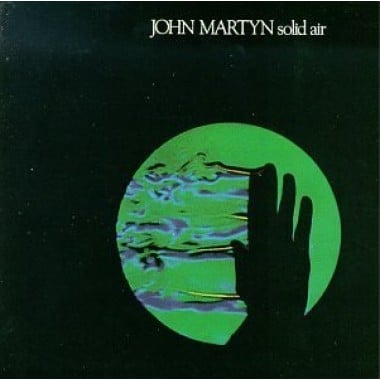
John Martyn - Solid Air
I've like Nick Drake since I heard his music playing over a candle-lit plate of pasta and a bottle of spicy shiraz in a tiny cabin in the woods along the Bow Valley corridor late one moonlit summer night with a couple of old friends.  But I'd never heard of his label-mate John Martyn until this summer.  First it was a song or two playing on my friend's stereo.  There's something in the music that catches you.  This album, recorded in 1973, is a gem.  With elements of folk, jazz, and acoustic rock, the music is hard to pin down, but it has a kind of magical timeless quality to it and reveals the great talent behind it.


Mike Del Ferro - New Belcanto - Opera Meets Jazz
featuring Toots Thielmans and Richard Galliano
I've already written about Mike Del Ferro and so once again, here is his album "New Belcanto - Opera Meets Jazz".  Incidentally, it's available in two versions on iTunes, with slight variations in the tracklist.  It was the treatment of Nessun Dorma on this album that first intrigued me.


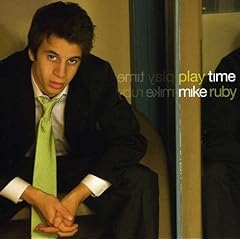
Mike Ruby - Play Time
This is a relatively new find but a young artist with as much talent as Mike Ruby is great to come across.  Some of these younger players are coming out with fresh and energetic takes on old standards, like the rendition of "Someday My Prince Will Come" on this record.


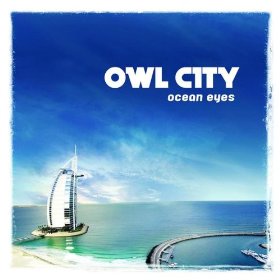
Owl City - Ocean Eyes
As a keyboard player I have a soft spot for synth-driven rock, especially when it's got some harmonic complexity that goes beyond the three-chord, beat-box variety you normally hear on the radio.  This is music that even a jazz aficionado could enjoy - it's got a lot of ideas going on, has interesting chord progressions, and amusing sounds that demonstrate some of the latest in synthesizer and computer-music technology.


Baptiste Trotignon - Solo
It was a pleasure to hear and meet Baptiste Trotignon at the 2009 Ottawa International Jazz Festival.  I picked up two of his albums, "Share" and "Solo".  Both are excellent, but "Solo" showcases his virtuosic piano playing more directly.  As the title implies it's a solo album and the original numbers reveal his phenomenal technique and compositional skill.

Monday, November 23, 2009

New Belcanto

Mike del Ferro, "New Belcanto - Opera Meets Jazz"

Great discoveries should be shared.   I came across Mike del Ferro's rendition of Nessun Dorma on Imeem.com more than a year ago.  Several months ago I went back and found that it was gone.   I finally tracked down the album.  It's available on iTunes.   Spoiler: this album will be on my Top 5 Albums of 2009.


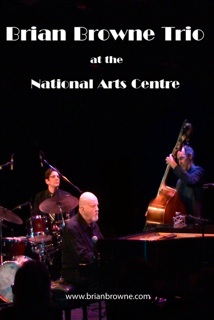
I've also been enjoying the new CD/DVD from my own piano teacher Brian Browne, entitled "Brian Browne Trio at the NAC".  A protege of Oscar Peterson, Brian is one of the greatest jazz pianists that Canada has ever produced.  The album is available at brianbrowne.com.


Thursday, October 8, 2009

Remembering E.S.T.


http://www.youtube.com/watch?v=5mr9Ahdvpbo

Just over a year since the jazz world lost Esbjorn Svensson.  E.S.T. defined a whole new trajectory in jazz. "It's not what jazz is, but it's what jazz could be".

Saturday, April 11, 2009

Sound Test

My attempt at creating a patch in Omnisphere. It's inspired by a Korg Triton combi but the sound here is 100% Omnisphere. The music is an excerpt from an original composition.


©2009 Darren DeRidder

Saturday, January 17, 2009

I Can't Get Started

A tune I recorded while messing around with Pianoteq... pretty raw and unedited, but I kind of liked the mood of it. Random melancholy shots to go along with the song.


© Darren DeRidder 2009

Wednesday, January 14, 2009

Top 5 Music Picks of 2008

In 2008 I spent some time experimenting with audiophile-quality digital music playback. Still working on that, but in the process I rediscovered some of my favorite CDs and found some new favorites, too. Here's a list of what (I think) got the most rotation on my playlist in 2008:

Taylor Eigsti - Lucky to Be Me
Still a teenager when he recorded this album in 2006, Taylor Eigsti is an absolute monster on the keys. He's a serious, heavy player. I picked this one up in '07 and it has remained a fave all through '08 as well, getting lots of airtime in my car. Although his roots in fusion show through in several of the tunes, his unique interpretations and total command of straight-ahead jazz standards on this disc is awesome. His take on "Woke Up This Morning" is one of the coolest, most grooving tunes on any jazz CD I own.

Yellowjackets - Twenty Five
The 'jackets have always been and will remain for me one of... if not the... top favorite bands of all time. More than any other group, the Yellowjackets have influenced my own playing and musical direction. So it's no surprise that one of their albums is in my top 5. "Twenty Five" is a CD / DVD combo that was released in 2006. I picked it up last year and it has certainly been in high rotation ever since, as are most of my other CD's by this group. Seeing them live was incredible - this live recording captures that energy really well. And the DVD, showing a bunch of other tunes performed live, is really cool too.

Lyle Mays - Lyle Mays
This self titled album was a hard one to find. I finally snagged a copy off Amazon and am so happy to have it in my collection now. I used to veg out to this album in Banff; its hauntingly beautiful and I can't hear this music without flipping back in my memory to the time I spent in that beautiful place and the events that happened there. It was a time of discovery and new horizons, and discovering this album by Lyle Mays is one of the biggest musical finds of my life. Lyle Mays is a legend among keyboard players. I'm still spinning this one a lot, particularly when I'm in the mood to shut out other distractions and really listen to the music.

EST - Tuesday Wonderland
Esbjorn Svensson Trio has been high on my playlist since I discovered them through a friend in Germany. Seeing them live was another mind-blowing event. I'm so glad I got the opportunity two years ago to do that, because last summer Esbjorn Svensson passed away in a tragic diving accident. These guys were in their 40's but they came practically running out on stage with sneakers and punky t-shirts and just played the shit out of their instruments for almost two hours straight, and then ran out. So vibrant and intense - no wonder they had a huge following among young people and shows with a rock concert atmosphere. EST has something of a cult following; they were really something special and this is a great album.

Moncef Genoud - Aqua
I discovered Moncef Genoud several years ago, and since that time he made appearances at the Montreal Jazz Festival and launched his first US release of a CD, "Aqua". His earlier recordings I had to specially order from Switzerland. Anyway, its good to see his music finding an audience in North America, and this album is really a lovely piece of work. I completely enjoy his playing, it always inspires me and never fails to satisfy when I need a good dose of straight-up acoustic jazz. Moncef is a wonderful improviser, and I was totally into his music a long time before I realized he is blind. He obviously doesn't advertise this as a way to get attention; his playing is so fluid and lyrical that once you start listening, his blindness will seem meaningless.

Honourable mention

Bobby McFerrin - The Best of Bobby McFerrin
Discovered through imeem.com, I found this tune by Bobby McFerrin called "Freedom is a Voice" with the Yellowjackets playing accompaniment. Once every few years I come across a tune that makes my neurons fire so frantically that I'll put it on repeat for hours, put on my Sennheisers, and have a musical and spiritual awakening until about 3AM. This song is one of those. I had to get the CD, and happily found that there are some fantastic cuts on this disk, including a couple of great collaborations with Chick Corea. McFerrin, Yellowjackets, Chick Corea... what a combination of talent; this is really a cool album. And yes, it does have "Don't Worry, Be Happy".

Thursday, July 3, 2008

Serenade For The Renegade

The news of the passing of Esbjorn Svensson on June 14th came as a very sad shock to me and many others around the world who became familiar with the extraordinary musical creativity of the Esbjorn Svensson Trio (EST).

EST quickly became one of my favorite musical groups when I special-ordered and picked up their album "Strange Place For Snow" after having it recommended by a German friend with notably fine taste in European jazz.

Their music was energetic, buoyant, fresh and hauntingly beautiful. The loss of a rising jazz leader so early in his career is really a tragedy. I encourage those with a musical ear to check out EST.

Sunday, April 13, 2008

Math Makes Music

I've written before about the intersection of art and technology. As a musician and an engineer, I'm always interested in art that is techie and tech thats artful. Last week I had the distinct pleasure of discovering a little piece of technology that I think is one of the coolest things I've ever seen in my life, ever. It's a software-based piano synthesizer that turns the whole world of digital piano technology on it's head.

Piano players can't really lug a piano around easily, so you never know when you show up at a gig what kind of instrument you'll have to play on. I've seen everything from a Bosendorfer to a beat up electronic Casio with the sustain pedal polarity wired in reverse. The notes wouldn't stop until you stepped down on the pedal, exactly the opposite of how it normally works. It was like trying to drive down the freeway backwards.

Like a lot of other pianists, I sprung for a decent digital stage piano that I can take to gigs with me. It's also good for recording, because miking a recording on an acoustic piano is hard to do properly. With digital, you can go back and fix your mistakes! For a number of reasons, a digital piano is really useful. But they have never been able to fully replicate the sound of a real acoustic grand piano.

In recent years, software based "sampled" digital pianos have gotten really good. Some take up hundreds of megabytes or gigabytes of disk space, with each note on the piano recorded at different velocities for up to 60 seconds, with and without the sustain pedal. Playing a moderately polyphonic piece of music requires a ton of memory and CPU power. If you have too many notes sustaining at once you can get clips and drop-outs. No matter how good they sound they are just not the same as playing a real piano.

Pianoteq takes a totally different approach. Rather than trying to record every nuance of an acoustic piano and replay the sound samples in software, Pianoteq builds a mathematical model of the physics of a piano. Everything from the length of the strings to the hardness of the felt hammers to the impedence of the soundboard is taken into consideration... and presented in the clean user interface so you can tweak it. You can build a10-meter long piano if you want to! As a bonus, there are no gigabytes of sampled data to download; the whole program was less than 14 megabytes! It mathematically calculates what the waveform of the sound will be, taking all the parameters into consideration, and then constructs the sound image in real-time.

At some point in their musical development, an instrumentalist comes to the realization that a truly fine instrument can actually make them play better. After you've spent years working on your chops, you sit down with a really great instrument and notice all sorts of ideas and techniques suddenly bubbling out of your creative reservoir. That's when you can really tell a great instrument from the mediocre. And you know, nothing is going to compare with a 9ft Bosendorfer, but after playing just about every model of grand piano out there, and dozens of digital pianos and software synths, I sat down with this Pianoteq software and was blown away. It made me play better. In one evening of jamming with it I came up with more ideas, changes and riffs than I have in months.

After keeping a careful eye on a dozen or so digital sampled piano packages, waiting for something truly convincing to come along, the wait is over. Pianoteq has what it takes.

Although I agree with another reviewer that some of the preset piano models sounded a little bit flat in the mid-range right out-of-the-box, I'll be quick to point out that the onboard EQ and reverb settings, not to mention the individual harmonic overtone settings, let you tweak the tone color to your heart's content. Actually, I suspect whats happening is that Pianoteq is almost too realistic, and those of us who've gotten used to the heavily-processed sampled piano sound just are not used to the natural purity of tone coming out of our headphones. And no other piano software gives you the range of configurable parameters to construct any type of piano model from a 9ft concert grand to a1980's vintage Yamaha CP80 electric stage piano.

Created by a pianist-turned-mathematician, Pianoteq is a great example of the combination of art and technology to produce something brilliant.

Productivity and Note-taking

I told a friend of mine that I wasn't really happy with the amount of time that gets taken up by Slack and "communication and sched...